Know What Every Number Means Before You Trade

These trading basics explain how CFDs, margin and costs work on SelfMSF, with a worked oil example that shows a gain and a loss in real numbers.

What Is a CFD?

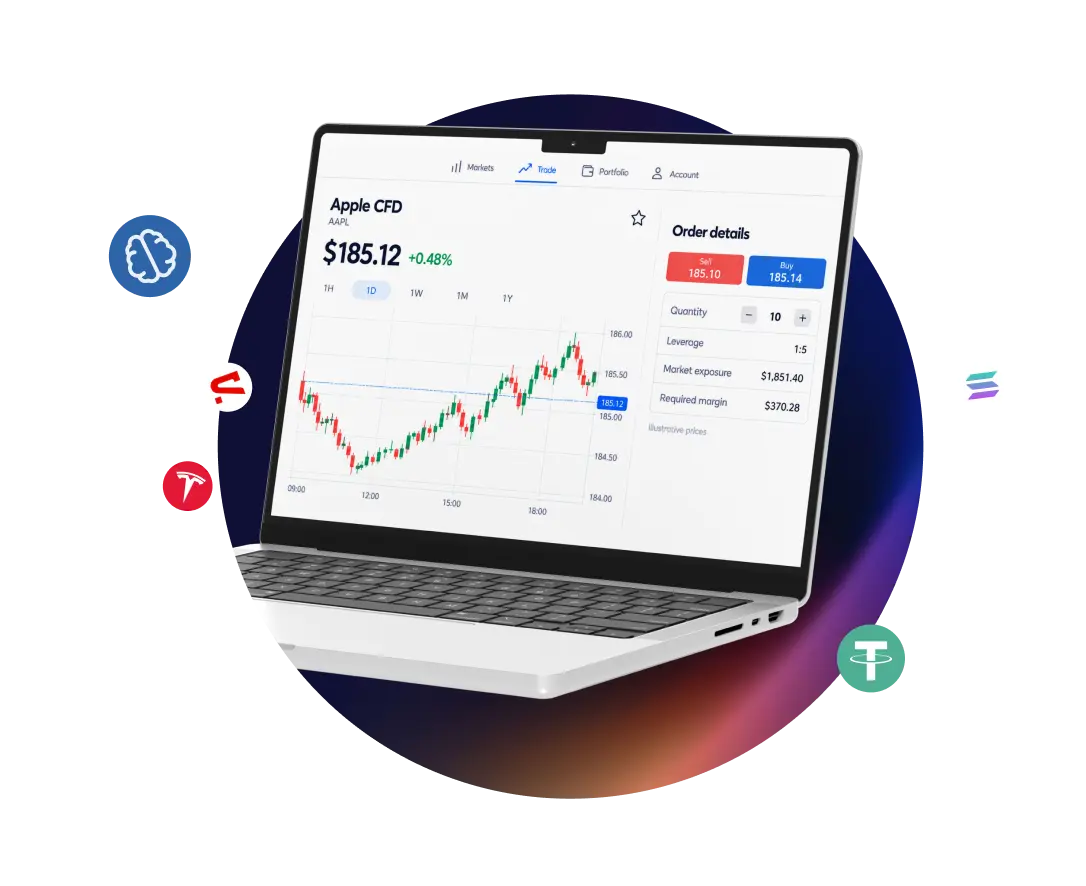
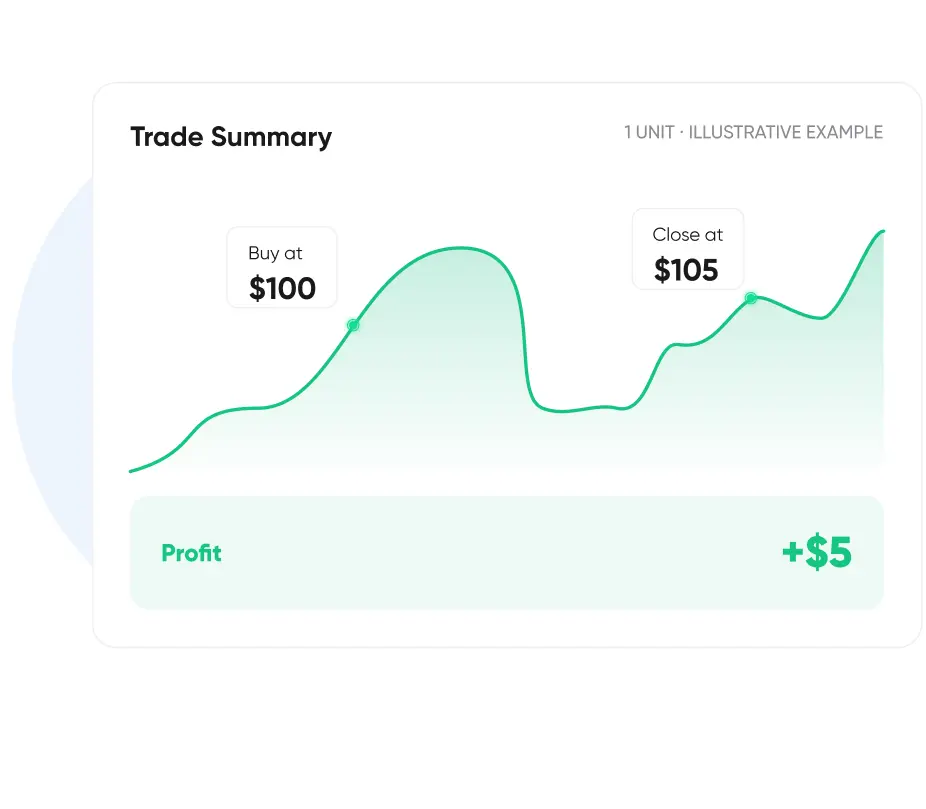
A CFD, or contract for difference, lets you trade a market’s price without owning the asset. Open a buy position if you expect a rise or a sell position if you expect a fall. Your gain or loss is the price change between opening and closing, times your position size.

How Margin Holds Your Position Open

Margin is the deposit you put down to open a CFD position, set as a share of its full value. If losses bring your account close to the margin needed to keep positions open, you’ll get a margin call. If your margin keeps falling, those positions can be closed automatically.

How Does Leverage Work?

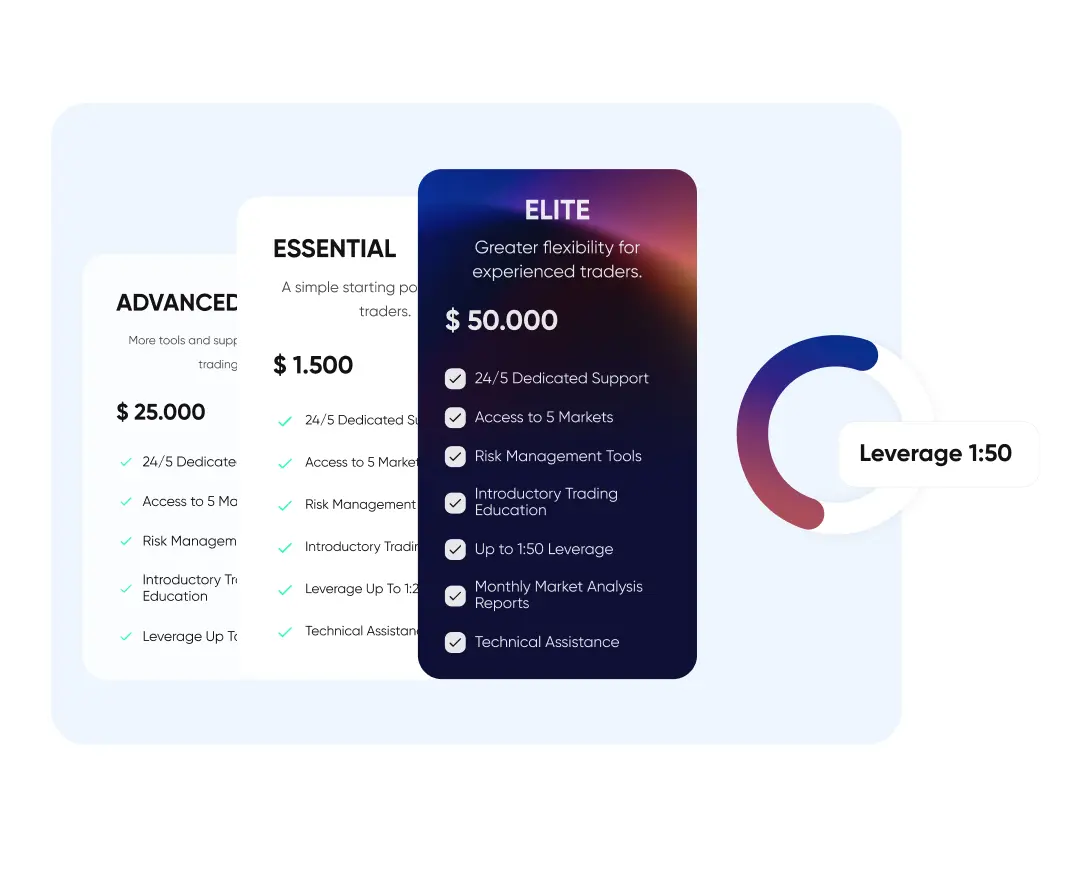
Leverage compares your position size with your margin. A 10% margin requirement means leverage of 1:10, where $500 controls a $5,000 position. Leverage increases both gains and losses. A 2% price move is $100, or 20% of your margin, in either direction. Limits vary by market, account and jurisdiction.


See Your Trading Costs Before You Confirm

The spread is the gap between the buy and sell price. Depending on the market and your account, you may pay through the spread, a commission or both. Positions held overnight usually carry a daily charge or credit, shown before you trade.

Set Your Entry and Exit in Advance

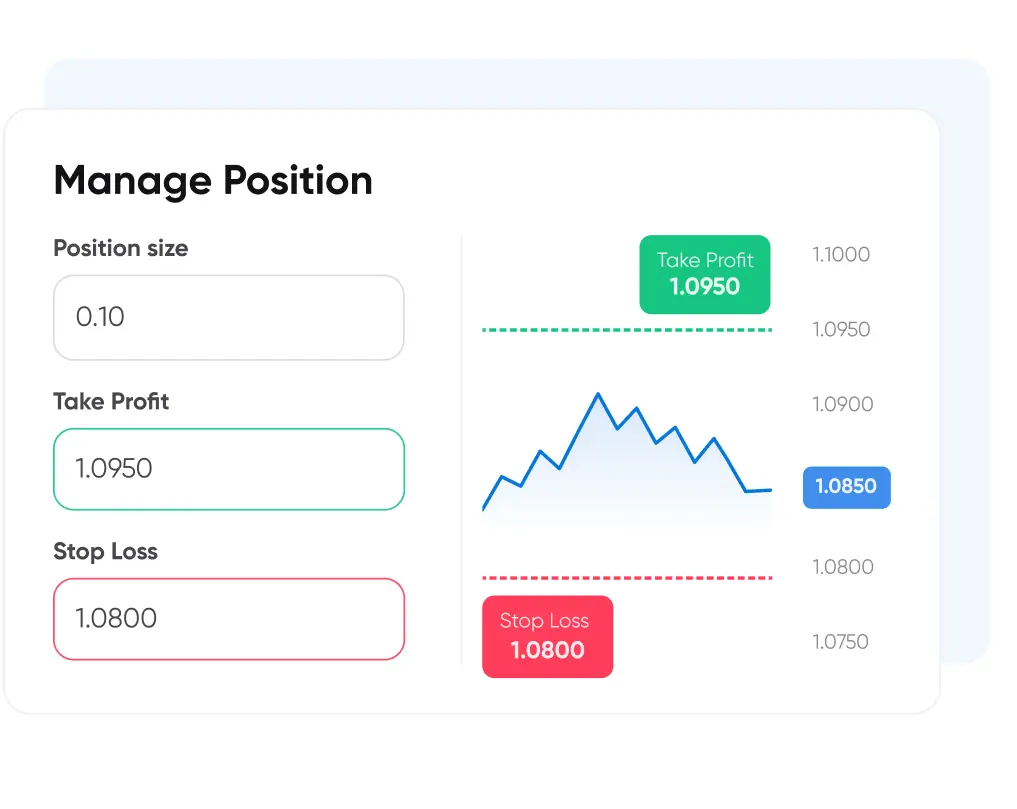
A market order fills at the next available price, and a limit order fills only at a price you choose or better. Stop loss and take profit orders close a trade when price reaches your levels, though fast markets or price gaps can fill a stop at a worse level.

How to Manage Risk When You Trade

Every CFD position can lose money. Many traders risk a small, fixed share of their account on each idea. On a $5,000 account, risking 1% means sizing the position and stop loss so a losing trade costs about $50. Our legal terms set out the full risks.

Put the Basics to Work in Three Steps

Create Account

Sign up with your name, email address and phone number, then confirm your identity.

Deposit

Make your first deposit with a payment method available in your country and use one balance across all six markets.

Start Trading

Choose a market and a direction, then check your position size, stop loss, margin and costs before you trade.

Trading example

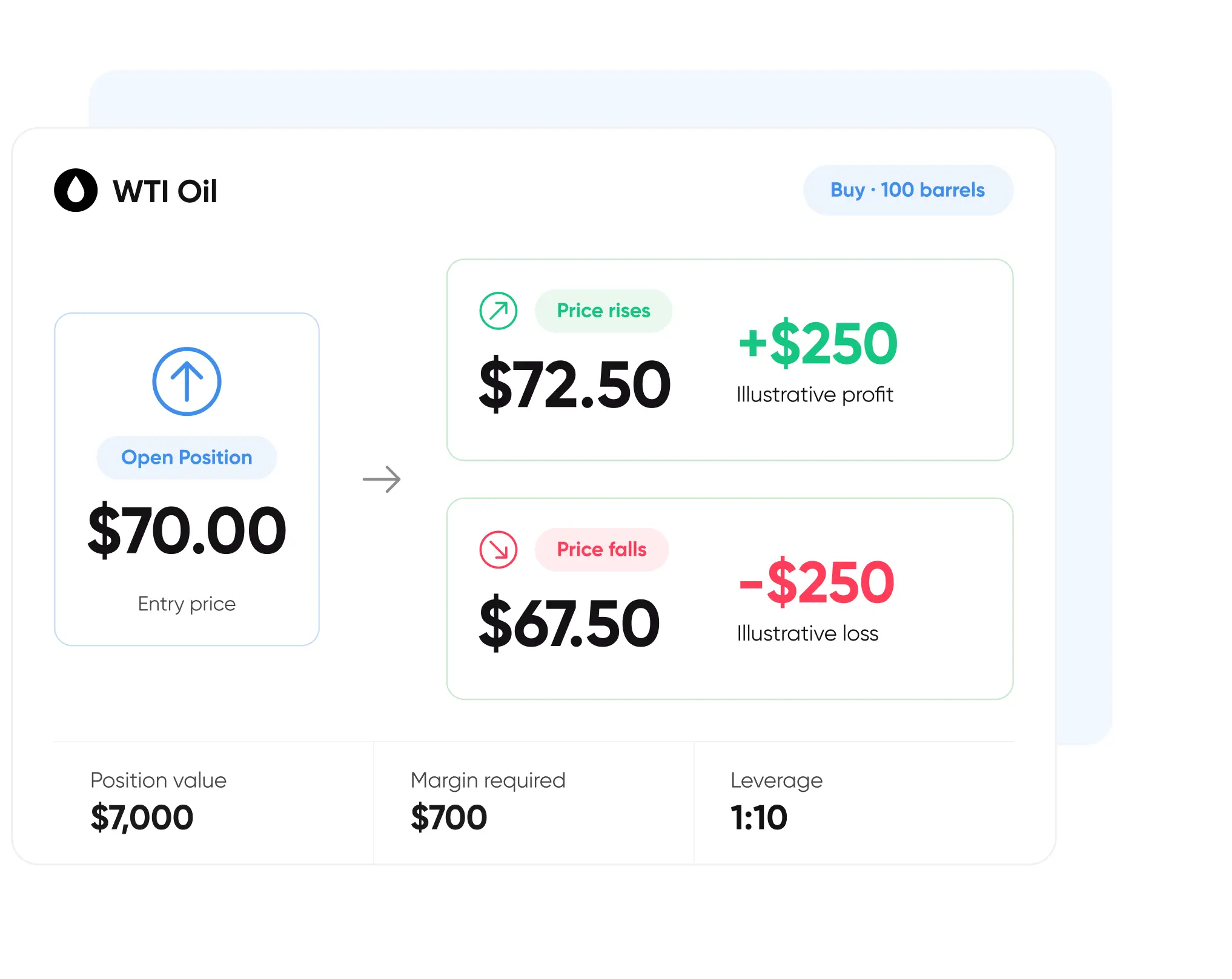
Oil is at $70 and you open a CFD buy position on 100 barrels. At 1:10 leverage, the $7,000 position needs $700 of margin. A rise to $72.50 gains $250, and a fall to $67.50 loses $250. Leverage increases both gains and losses, and trading costs come on top.