Access Bitcoin, Ethereum and other digital assets through ICX Global, with live pricing, focused crypto insights and trading tools for users in France, Canada and Australia.
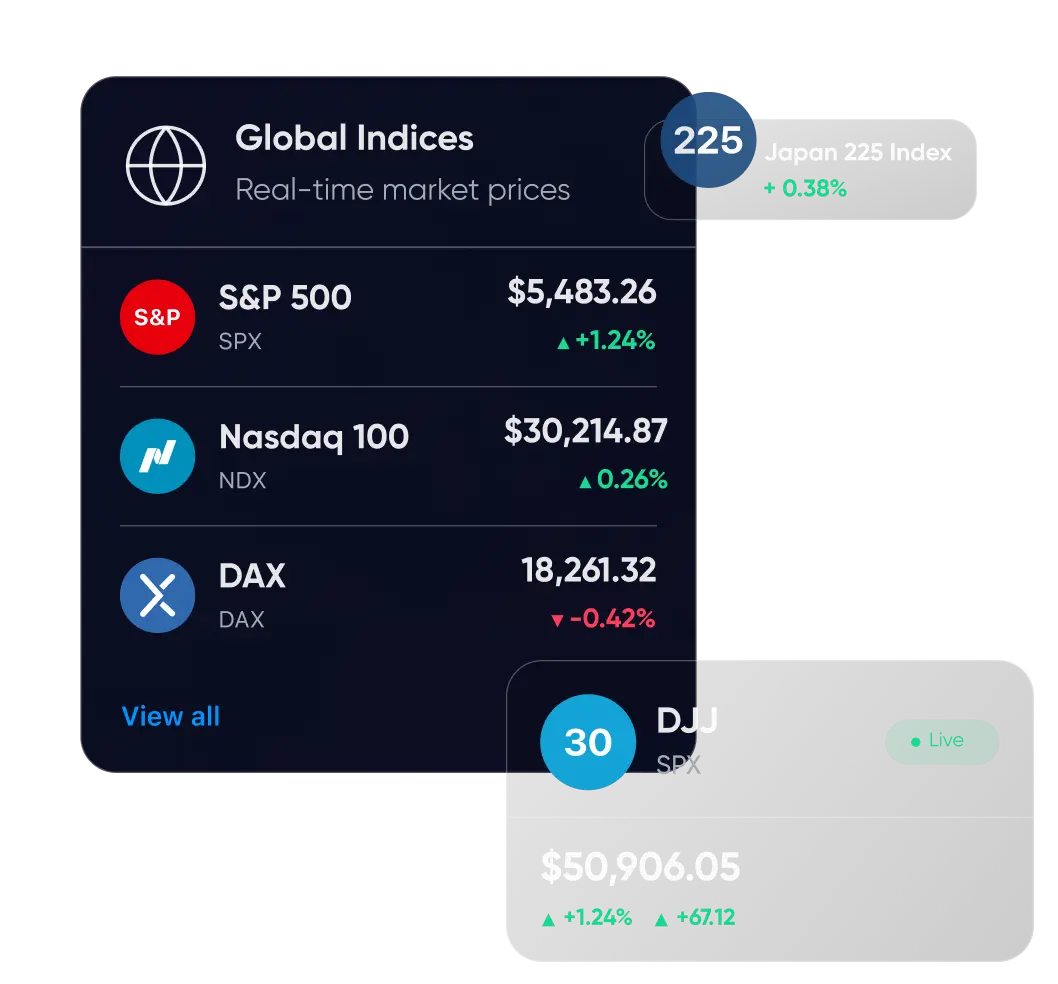
Follow live prices across US, European and Asian benchmarks and see which regions are rising or falling before you choose your next index position.
Index traders describe how they trade the S&P 500, DAX and other benchmarks on the SelfMSF platform, and the details they check before placing an order.
Register and confirm your identity to trade the S&P 500, Nasdaq 100, DAX and other benchmarks.
Fund your account and check you have enough available margin for the index position you have in mind.
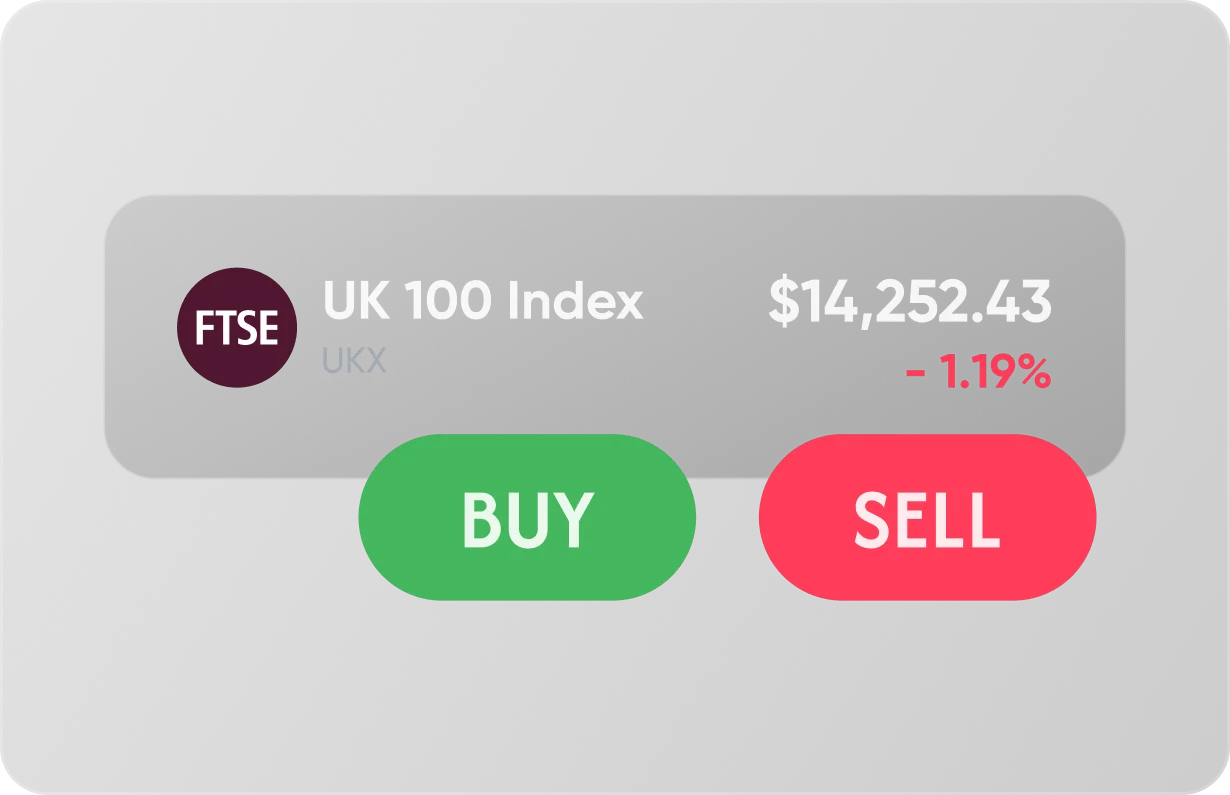
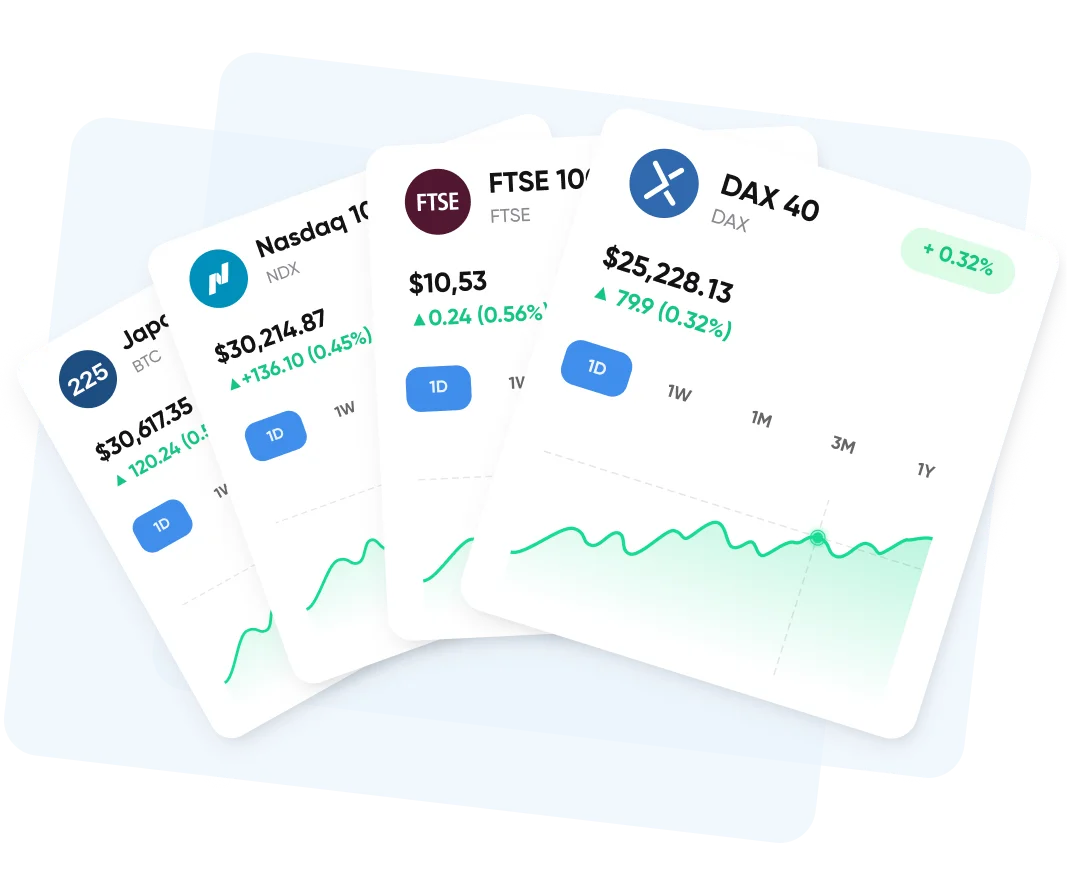
Keep the benchmarks you follow side by side, then take one position on a whole market, long or short.
How the main stock indices are built and weighted, and how trading them as CFDs works on SelfMSF.
An index CFD lets you take a position on the value of a stock market index, like the S&P 500 or the DAX, in a single trade. Your gain or loss follows the index’s combined move, and you don’t own any of the shares inside it. Index CFDs on SelfMSF can be traded long or short, and each one has its own trading hours and margin requirements.
Most major indices, including the S&P 500, the Nasdaq 100 and the DAX, are weighted by market value, which means a company worth $3 trillion carries far more weight than one worth $30 billion. The Nasdaq 100 and the DAX also apply caps that limit how much a single company can count for. The Dow Jones Industrial Average is weighted by share price, which gives the highest-priced shares the most influence.
A few companies can move a whole index because the largest ones make up a big share of its value. In recent years the ten biggest companies in the S&P 500 have accounted for more than a third of the index, which means a strong or weak day for a handful of tech giants can outweigh what most of the other members are doing.
Market breadth measures how many companies in an index are rising compared with how many are falling. An index can reach a record high while most of its members fall, if a few large ones are climbing fast. Traders look at breadth to judge if a rally has wide support across the market or rests on a small group of stocks.
The S&P 500 tracks 500 large US companies across every sector, chosen by a committee at S&P Dow Jones Indices. The Nasdaq 100 tracks the 100 largest non-financial companies listed on the Nasdaq exchange, which makes it heavier in technology. The two often move in the same direction, but the Nasdaq 100 has tended to move further when tech stocks lead.
The DAX tracks the 40 largest companies listed on the Frankfurt Stock Exchange, weighted by market value with a cap on any single company. It includes carmakers, chemical companies, insurers and software firms, and many of them earn much of their revenue outside Germany. That’s why the DAX often reacts to global trade news and moves in the euro as well as to German economic data.
Indices often react to news that changes the outlook for many companies at once. Central bank rate decisions, inflation figures and jobs data can shift expectations for borrowing costs and earnings across the market, and results from the largest constituents can move an index on their own. The same release can lift one index and weigh on another, depending on the sectors each one holds.
Margin is the deposit required to open an index CFD position. The amount depends on the index, position size and applicable leverage, which varies by provider and jurisdiction. Leverage magnifies both gains and losses. Index prices can move sharply after major economic announcements, and stop-loss orders may help limit losses, although execution at the chosen price isn’t guaranteed.
Take a long or short position on leading global benchmarks from your SelfMSF account.
Trade Indices →