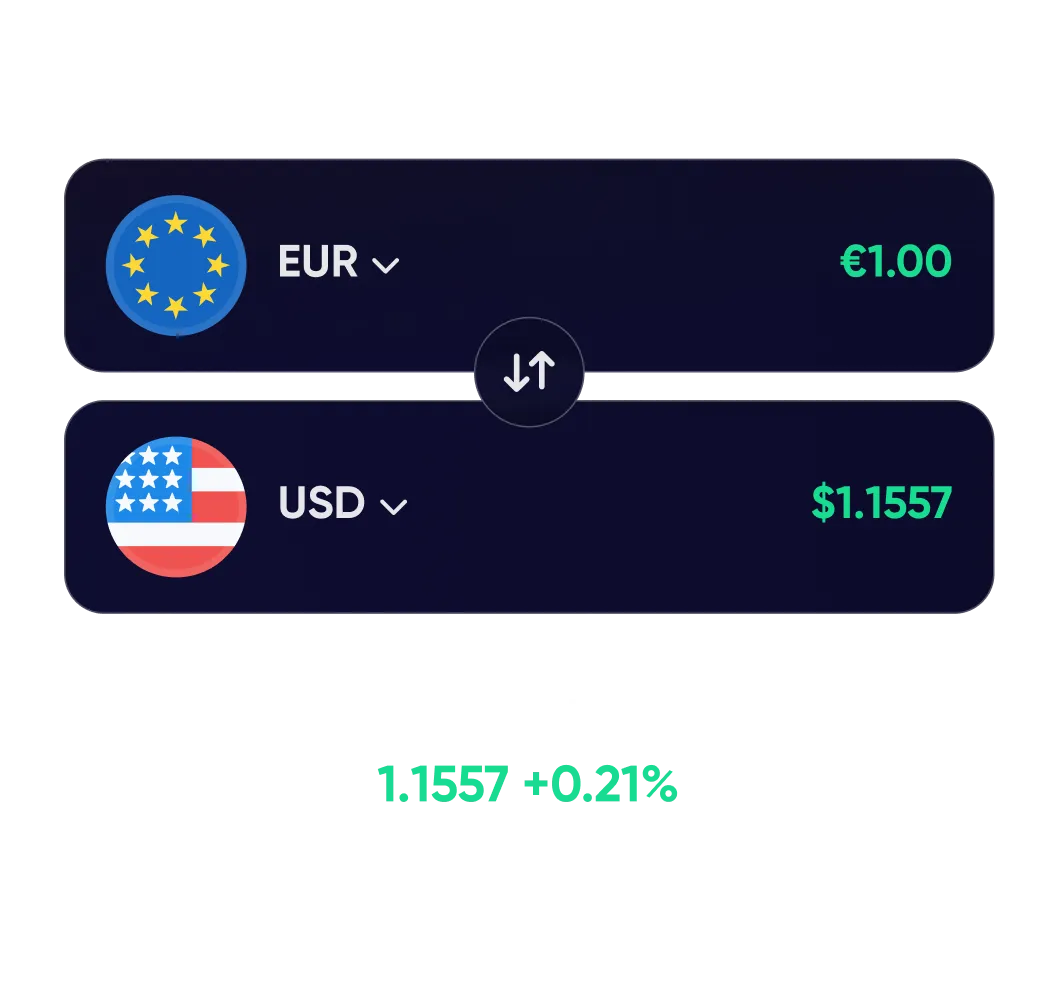
Trade CFDs on EUR/USD, USD/JPY and other pairs through the Tokyo, London and New York sessions, taking a position on the exchange rate without swapping any currency.
See which currencies are most active as each trading session opens and closes, with live CFD rates on EUR/USD, EUR/GBP and other pairs.
Currency traders explain which pairs they follow and how the trading day in their part of the world shapes when they open a position.
Sign up online and verify your identity to trade major and minor currency pairs from one account.
Fund your account in the currency you use day to day to trade EUR/USD and other pairs.
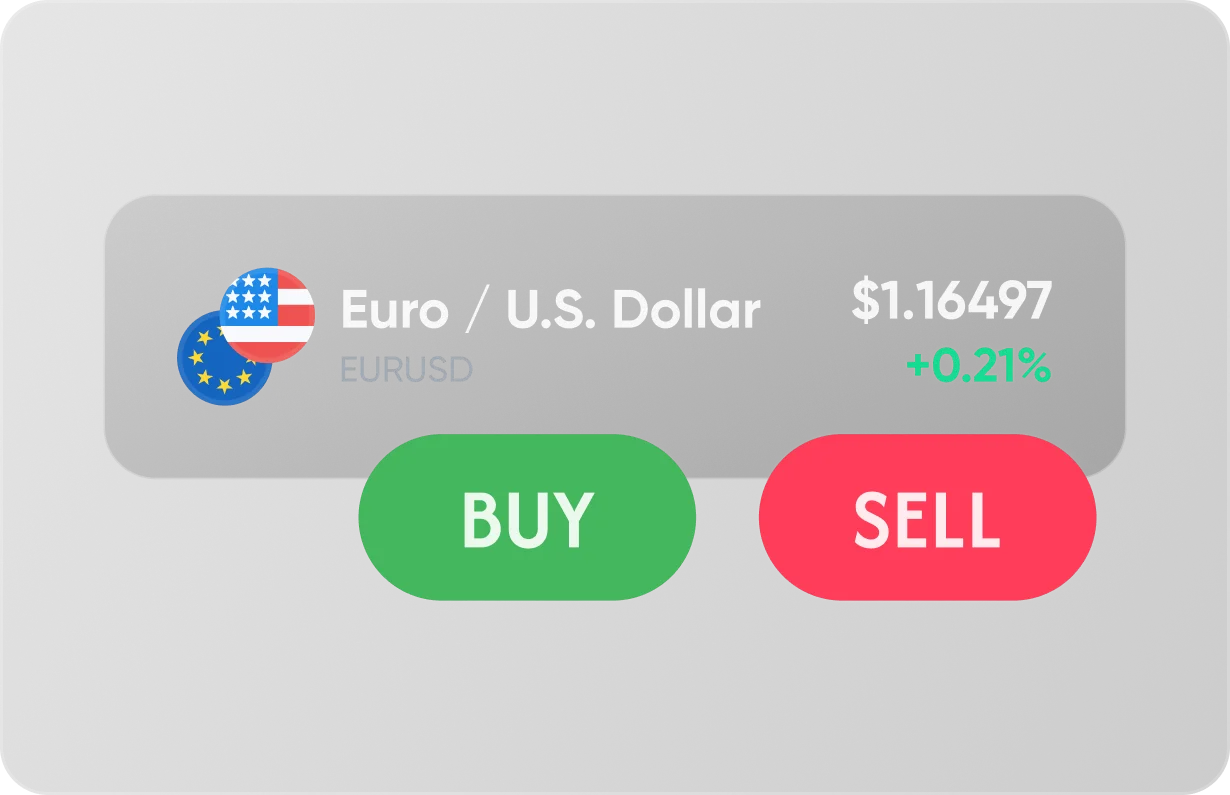
Choose a currency pair, check market conditions and open a buy or sell position based on your trading plan.
Straight answers on how currency pairs are priced and how forex CFDs work on SelfMSF.
Forex trading means taking a position on how the exchange rate between two currencies will change. Pairs are quoted with a base currency first, like EUR in EUR/USD, and the price shows how many US dollars one euro buys. On SelfMSF, you trade forex as a CFD, which means you gain or lose on the rate’s movement without exchanging or holding either currency.
Forex is the largest financial market in the world by trading volume. Currency trading averaged $9.6 trillion a day in April 2025, according to the Bank for International Settlements, and the US dollar was on one side of 89% of all trades. That reach is why a US jobs report or a Federal Reserve decision can move many pairs within minutes of each other.
Exchange rates often react to anything that changes how traders compare two economies. Interest rate decisions tend to carry the most weight, because a currency with higher or rising rates can attract more demand. Inflation and jobs figures shift expectations for those decisions, and elections or trade disputes can move a single currency on their own. The same type of news can produce a different reaction each time, depending on what the market expected.
The forex market moves through four main sessions named after Sydney, Tokyo, London and New York, opening on Sunday evening and closing on Friday evening, New York time. Each pair tends to be busiest when its home markets are open, and many traders focus on the overlap between London and New York, when volume is usually highest. Trading hours for each pair on SelfMSF are shown on the platform.
A pip is the standard unit for measuring a change in an exchange rate. For most pairs it’s the fourth decimal place, which means EUR/USD moving between 1.1000 and 1.1001 is a one-pip move. Pairs that include the Japanese yen are quoted to fewer decimals, which puts the pip at the second decimal place. Your gain or loss per pip depends on the size of your position.
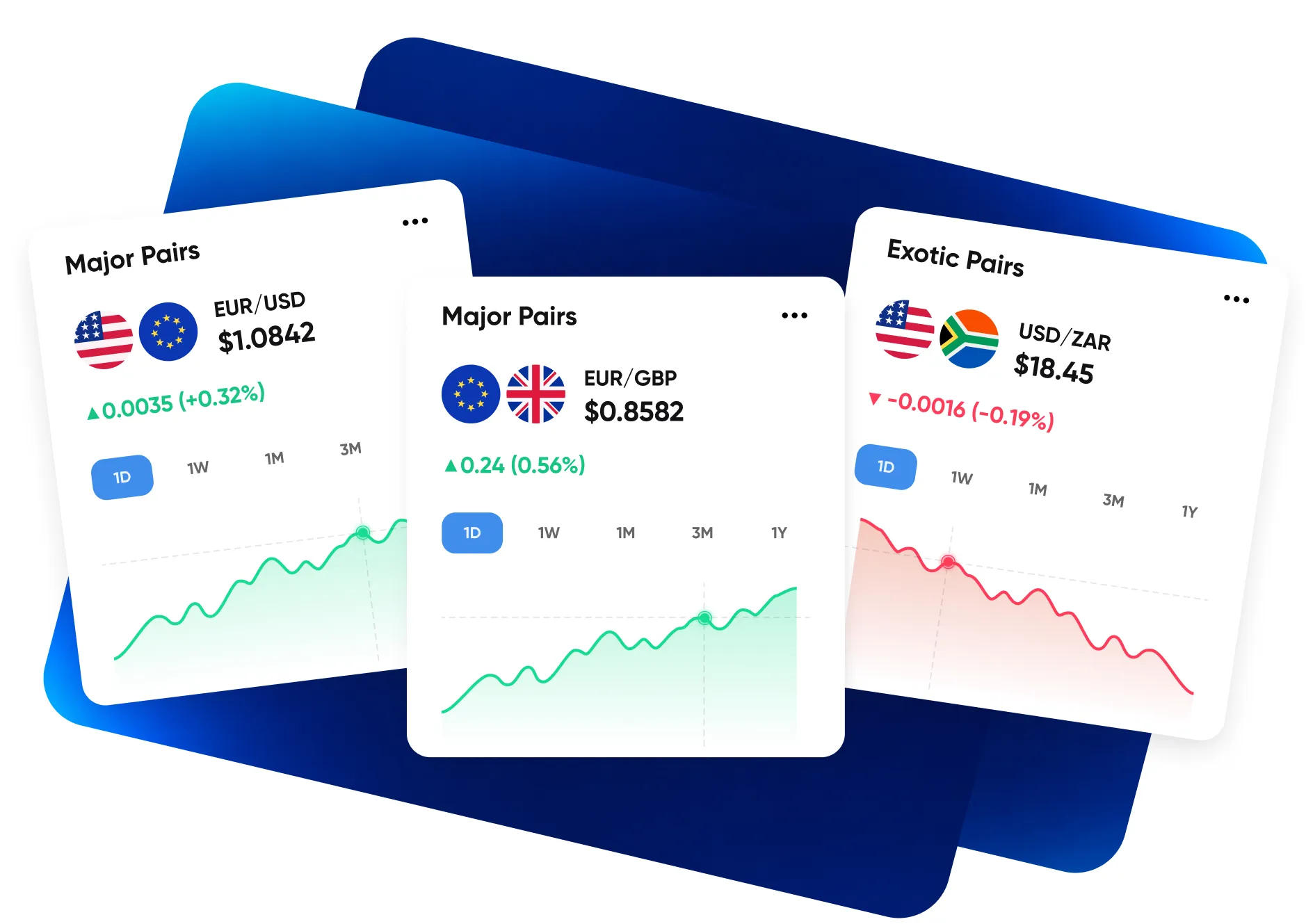
Major pairs include the US dollar and another widely traded currency, such as EUR/USD, USD/JPY or GBP/USD. Minor pairs, also called crosses, combine two major currencies without the US dollar, such as EUR/GBP or AUD/JPY. Majors generally have higher liquidity and tighter spreads, although trading conditions vary.
A swap is an overnight financing adjustment that may apply when you hold a forex CFD position beyond the provider’s daily cut-off time. It reflects factors such as interest rate differences between currencies and the provider’s pricing. Depending on the pair and trade direction, it may be a charge or a credit.
Leverage lets you control a larger currency position with a smaller deposit, called margin. With 10:1 leverage, $100 of margin controls $1,000 of exposure. Leverage increases both gains and losses, and even a small price move can have a big effect on your account.
Register with SelfMSF to trade CFDs on major and minor currency pairs alongside the five other markets in your account.
Open Your Account →