
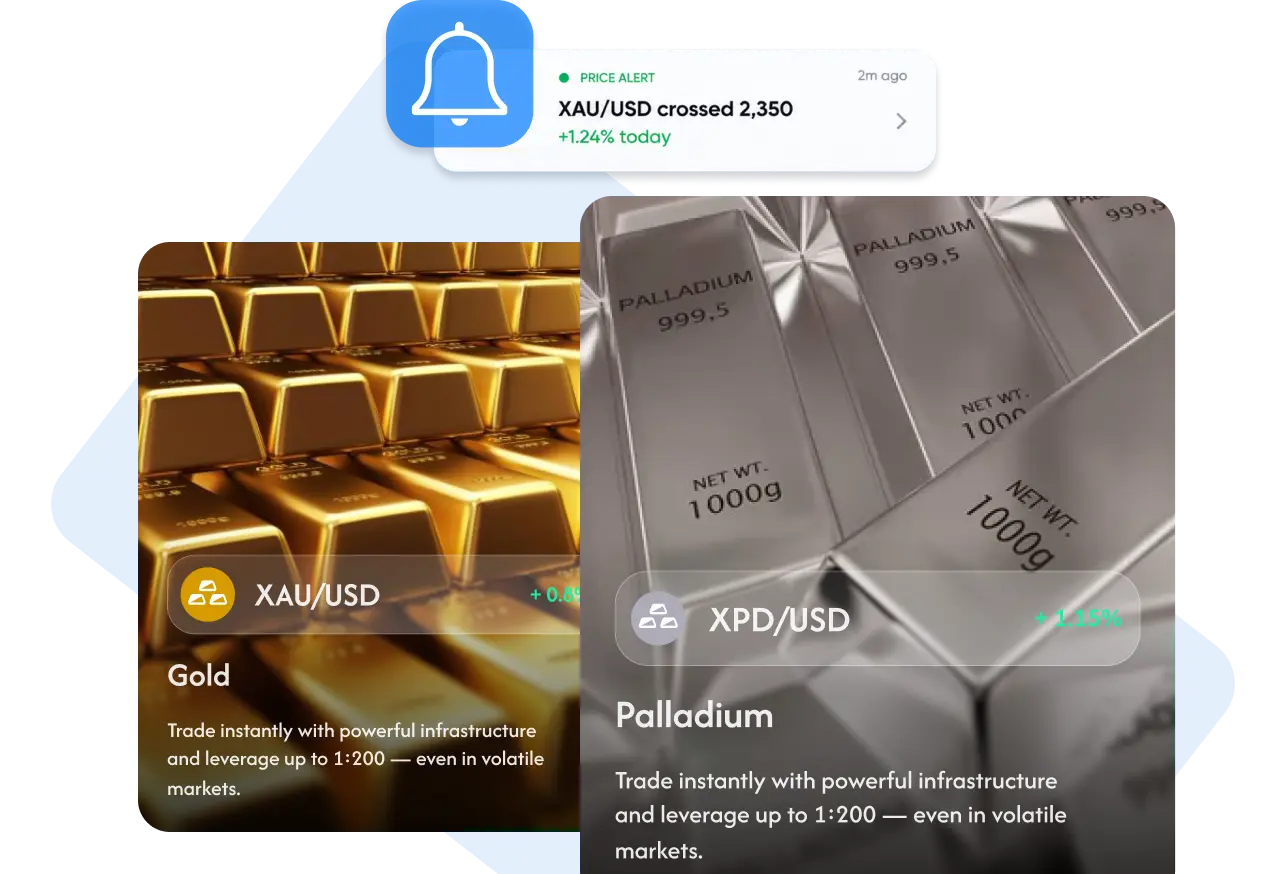
Metals trading on SelfMSF covers gold, silver, platinum and palladium as CFDs, each priced on its own balance of investor and industrial demand, with no metal to store.
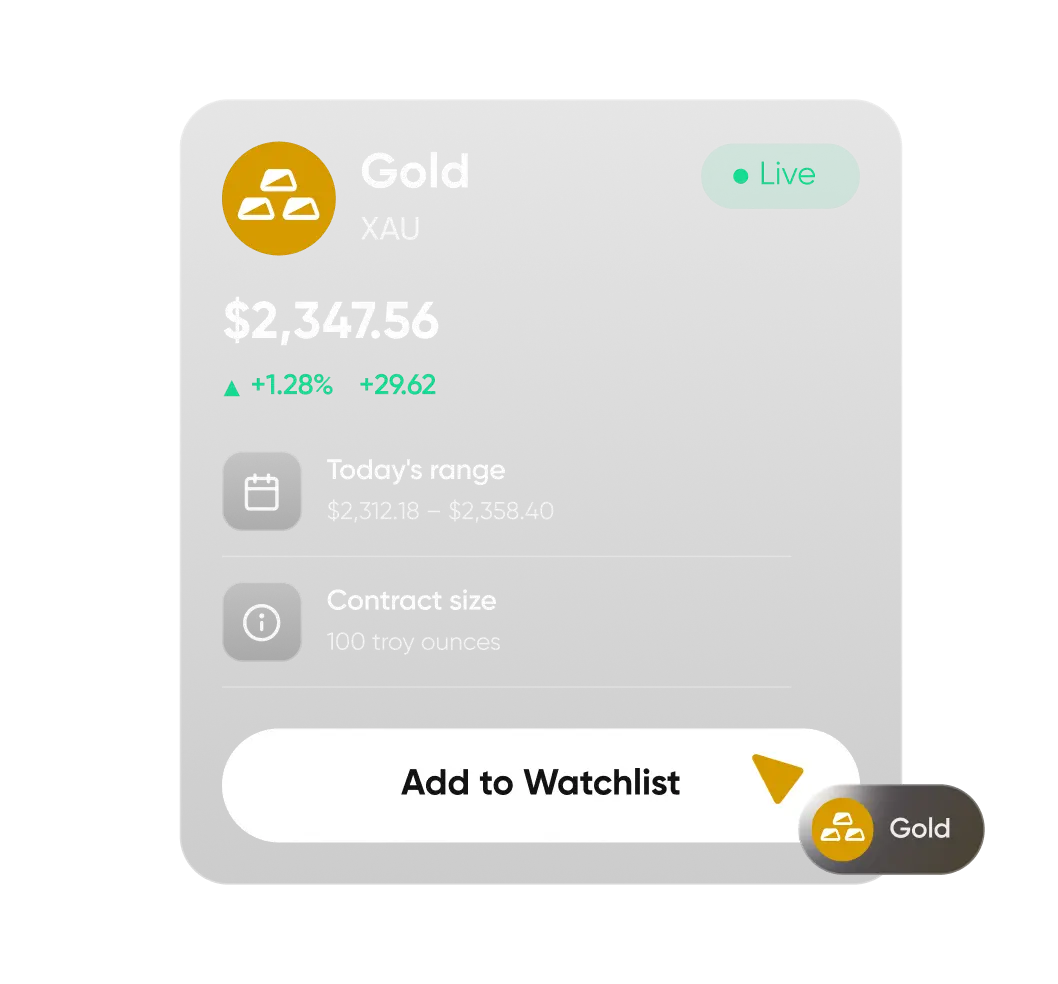
Live CFD prices on gold, silver, platinum and palladium show which metal is moving most today, and by how much compared with the others.
Traders explain why they follow gold, silver, platinum or palladium, and what they’ve noticed about how each one trades.
Sign up and verify your identity to trade gold, silver, platinum and palladium as CFDs from one account.
Fund your account in your own currency, with metals quoted per troy ounce in US dollars.
Choose a precious metal, look at how its price has been moving and go long or short in line with your plan.
What tends to move each precious metal and how metals CFDs work on SelfMSF, with costs and risks included.
Metals trading on SelfMSF involves CFDs on precious metals such as gold, silver, platinum and palladium, typically quoted per troy ounce in US dollars. You open a buy or sell position and gain or lose based on price movements. You don’t own or receive physical metal, and positions held overnight may incur financing charges depending on the instrument and trading conditions.
Gold often reacts to real interest rates, the US dollar and demand from investors and central banks. Because gold pays no interest, it can lose appeal when inflation-adjusted bond yields rise and gain appeal when they fall. A weaker dollar has often supported gold, though the relationship isn’t fixed and can break down for long stretches when other buyers, like central banks, dominate demand.
Gold is often described as a safe-haven asset because investors have tended to buy it during financial stress, conflict or high inflation. That reputation doesn’t make it stable. Gold can fall sharply in a crisis when investors sell it to raise cash, and it can stay flat for long periods. A gold CFD on SelfMSF can lose value like any other CFD position.
Silver is used as both a precious metal and an industrial one, which means its price can respond to factory demand as well as to the forces that move gold. Industry accounts for more than half of silver demand, including solar panels and electronics. Silver is also a smaller market than gold, and its daily price moves have often been larger in percentage terms.
Both metals are used in catalytic converters, but in different engines. Palladium goes mainly into converters for gasoline cars, while platinum is used more in diesel engines and has larger demand from jewelry, chemical production and glassmaking. South Africa is the largest platinum producer and Russia is a major palladium source, which means mining or sanctions news can move each metal differently.
The gold to silver ratio shows how many ounces of silver it takes to equal the price of one ounce of gold, and traders use it to compare the two metals. A rising ratio means gold is outperforming silver, which has often happened during periods of investor caution, and a falling ratio means silver is gaining ground. The ratio describes past moves and doesn’t predict the next one.
Yes. Leverage lets you open a larger metals position with a smaller deposit, called margin. Metals leverage on SelfMSF goes up to 1:200, depending on the metal and your account level. Leverage increases both gains and losses. Gold can move several percent in a day after a major data surprise, and silver and palladium have often moved further, which can use up margin quickly.
Trade gold, silver, platinum and palladium as CFDs and take your next step with SelfMSF.
Trade Precious Metals →