
Trade Crypto Price Moves Without Owning the Coins

Take a position on Bitcoin, Ether and other major coins rising or falling, from the same SelfMSF account as your other markets and with no wallet to manage.

Follow the Coins Moving the Market

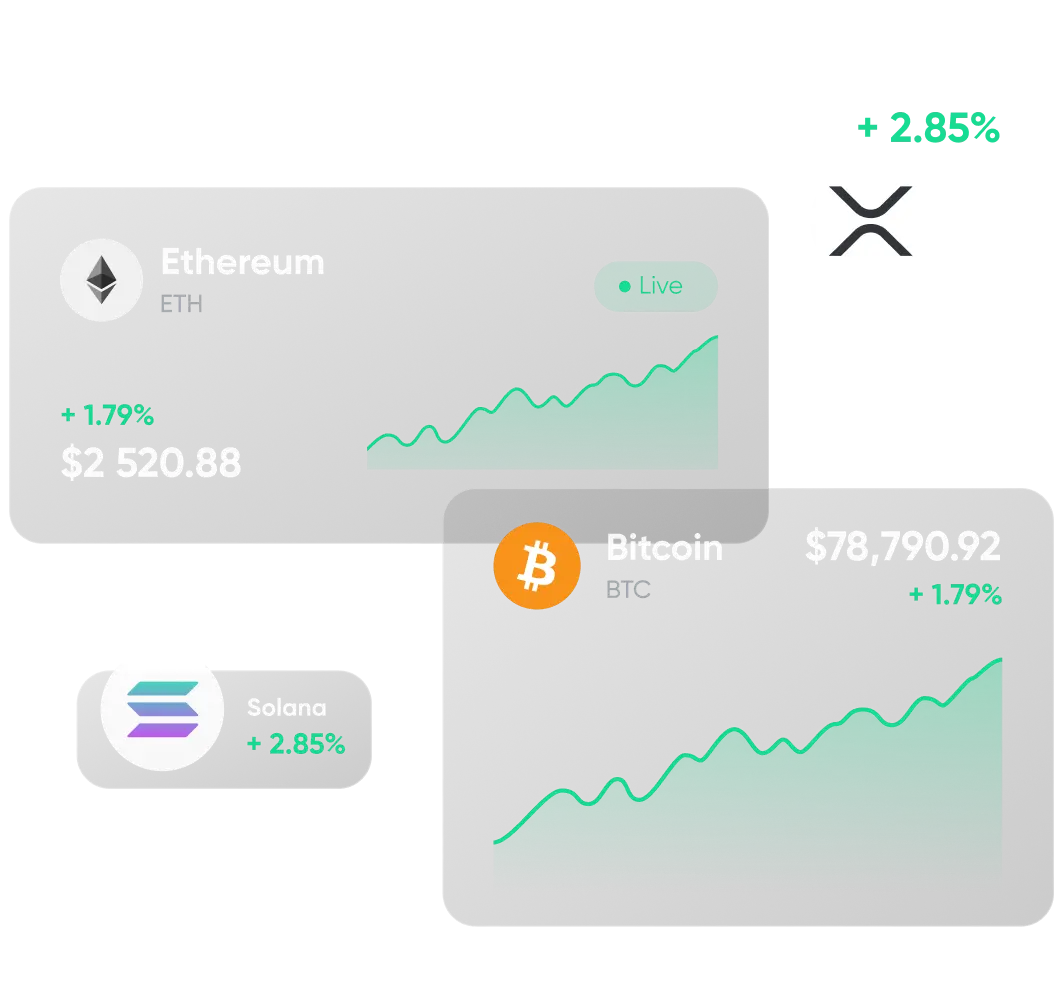
Live CFD prices for Bitcoin, Ether, XRP, Solana and other major coins help you spot the biggest movers before you choose a position.

How Traders Use Crypto CFDs on SelfMSF

Traders explain where crypto fits into their accounts, including short trades, hedging coins they already hold and keeping risk in check when prices swing.

Grace H.
“When Bitcoin kept sliding through the ETF outflow headlines, I opened a short CFD and left the coins on my exchange alone. Trading the drop without selling anything is why I signed up.”
Grace H., Brisbane, Australia
Erik N.
“Long-term Ether holder here. In choppy weeks I hedge part of it with a small short CFD, and the P&L sits right next to my other positions, which makes it simple to keep track of.”
Erik N., Copenhagen, Denmark
Thomas B.
“I never wanted to mess around with wallets and seed phrases. I fund in dollars and trade BTC from the same account as my indices 👌”
Thomas B., Bristol, United Kingdom
Léa M.
“Solana gapped right past my stop once and the loss was bigger than I'd planned. These days my crypto positions are smaller and I check the margin figure before every trade.”
Léa M., Montreal, Canada
Ciarán F.
“Overnight charge on crypto is higher than on forex. You see it before you confirm, and it's why most of my crypto trades only last a few days.”
Ciarán F., Galway, Ireland

Start Trading Crypto CFDs in Three Steps

Create Account

Register online and verify your identity, with no crypto wallet, private keys or exchange account to set up.

Deposit

Add money in your own currency, and it sits in one balance alongside your other markets.

Trade Crypto CFDs

Explore available crypto markets, follow price trends and choose whether to buy or sell based on your market outlook.

Crypto CFD Trading Questions Answered

How crypto CFDs work on SelfMSF, what they cost and the risks to understand before you trade.

What is crypto CFD trading?

Crypto CFD trading lets you take a position on the price of a cryptocurrency, like Bitcoin or Ether, without buying the coin itself. A CFD, or contract for difference, pays out the difference in price between when you open and close your position, as a gain or a loss. On SelfMSF, these positions sit in the same account as your other markets.

No. On SelfMSF, you’re trading on the price movement only, and no coins are bought, held or transferred in your name. That means you don’t need a wallet, private keys or an exchange account. It also means you can’t withdraw coins or use them on a blockchain, because your position is a contract with SelfMSF.

Yes. You can open a sell position, also called going short, if you expect a coin’s price to fall, as well as a buy position if you expect it to rise. Some traders also use short positions to offset part of the risk on coins they hold elsewhere. A move against your position results in a loss either way.

Crypto CFDs may be available on cryptocurrencies such as Bitcoin, Ether and other digital assets. The selection depends on the provider and your location. Each instrument has its own trading conditions, including spreads, margin requirements and trading hours.

Prices follow the underlying crypto markets, which can move several percent in a day on regulation news, large flows into or out of crypto funds or problems at a major exchange. Prices can also gap, jumping to a new level without trading in between, which means a stop loss may close your position at a worse price than the one you set.

Cryptocurrency markets operate around the clock, but Crypto CFD trading hours depend on the provider and instrument. Trading may include scheduled breaks or weekend restrictions. Prices can change while CFD trading is unavailable, creating a risk of gaps when trading resumes.

Trading costs may include spreads, commissions and overnight financing charges, depending on the provider and instrument. Costs can vary with market conditions and how long a position remains open. Review the applicable trading terms before placing a trade.

Leverage lets you open a larger position with a smaller deposit, called margin. Crypto leverage is usually much lower than on forex, and in many regions rules cap it for retail traders. Leverage increases both gains and losses, and in a volatile market a sharp move can use up your margin quickly

Add Crypto to the Markets You Trade

Open a SelfMSF account to trade the price moves of Bitcoin, Ether and other major coins, rising or falling, with no wallet or exchange account to set up.

Start Trading Crypto →